India’s Most-Exported Stones: A Field Guide to Twelve Famous Names
India is the world’s largest exporter of natural stone — and has been for decades. The reason isn’t volume alone; it’s that specific Indian quarries have produced specific stones that became architectural standards in places those quarry workers will never visit. Black Galaxy granite, quarried near Khammam in Telangana, sits in three out of ten American kitchens. Makrana white marble, from Rajasthan, built the Taj Mahal and now lines the floors of palaces from Doha to Brunei. Jaisalmer yellow sandstone, from the desert at the edge of the Thar, clads buildings in central London.
This is a field guide to twelve of those stones. Where each is quarried, why it became globally famous, the architectural language it built, and where it travels today. If you’ve been to a kitchen-and-bath showroom in Houston, walked across a hotel lobby in Dubai, or crossed a paving stone in a Melbourne backyard, you have probably been standing on one of these.
For the trade and procurement side — pricing, container logistics, market-specific applications — see our exports overview, and the country-specific pages for Australia, the UAE and the United States.
A short note on the categories
Indian stone exports fall into five broad families. Granite (igneous, hard, low-porosity — best for counters, façades, high-traffic floors). Marble (metamorphic limestone, polishable, premium — foyers and feature walls). Limestone (sedimentary, including the Kota family — landscape paving and traditional floors). Sandstone (sedimentary, often riven and earth-toned — paving and façade veneer). Quartzite (metamorphic sandstone, very hard — premium kitchen counters). The stones below cover each family with the names that have earned global recognition.
01 · Black Galaxy Granite
Origin: Cheemakurthi area, Prakasam district, Andhra Pradesh
Why it’s famous: Black Galaxy is the most-installed Indian granite in the world. The stone — dark grey to true black with golden-bronze flecks like stars on a clear night — became the kitchen-countertop standard across North America in the 1990s and has not been displaced since. The reason isn’t marketing; it’s geology. The Cheemakurthi quarry belt produces granite with remarkable colour consistency, very low water absorption (around 0.05%), high compressive strength and the kind of polish-finish stability that fabricators love. A Black Galaxy slab from 1995 still looks like a Black Galaxy slab from 2025.
Where it builds: Kitchen countertops across the United States, Canada, Australia and the UAE. Hotel lobbies and lift cores across the Gulf — particularly Dubai’s hospitality belt. Cemetery monuments and headstones worldwide. Façade-grade rainscreen cladding on commercial towers. Worth pairing with: warm-tone cabinetry (it photographs spectacularly against pale oak), bookmatched at a kitchen island, and as a thin-format porcelain accent rather than a feature stone in residential bathrooms. Browse the Black Galaxy Granite product page for finishes and specifications.
02 · Tan Brown Granite
Origin: Khammam district, Telangana (and adjoining areas of Andhra Pradesh)
Why it’s famous: If Black Galaxy owns the dark-kitchen segment, Tan Brown owns the warm-kitchen segment — and globally, the warm-kitchen segment is larger. The stone is a warm chocolate-brown punctuated by darker mineral flecks and occasional small garnet inclusions. American fabricators have specified it for thirty years because the colour is the kind of forgiving mid-tone that flatters every cabinet palette, the grain pattern hides crumbs and water rings, and the slab yield from Khammam blocks is predictable and high. The Khammam belt is geologically remarkable: relatively few quarry sites produce a disproportionate share of the world’s mid-brown commercial granite.
Where it builds: American kitchens by the thousand — Houston, Atlanta, Chicago, Phoenix. Australian residential renovation kitchens through Sydney and Melbourne fabricators. UAE villa kitchens and bathroom vanities. Commercial counter applications in retail and hospitality.
03 · Absolute Black Granite
Origin: Karnataka (Chamarajanagar district) and Tamil Nadu
Why it’s famous: Absolute Black is exactly what it sounds like — pure, uniform, true black, with no flecks or pattern variation. The stone is so consistent that it became the standard for cemetery memorial work worldwide; sandblast engraving on Absolute Black reads beautifully white against jet-black. The same property made it the choice for high-end retail interiors (luxury watch and jewellery boutiques globally use polished Absolute Black for the same dramatic contrast against gold and silver), upscale hospitality bathroom floors, and architect-led contemporary residential where the brief calls for “true black, no variation.”
Where it builds: Memorial and monument trade across the United States, Europe, Australia, the UK, Japan. Luxury retail and hospitality fit-outs in Dubai, London, Singapore. Contemporary residential bathrooms and kitchens worldwide. See the Absolute Black Granite product page for finishes including polished, honed, leathered and flamed.
04 · Kashmir White Granite
Origin: Madurai region, Tamil Nadu
Why it’s famous: Despite the name, Kashmir White isn’t quarried in Kashmir — it’s from the Madurai belt in Tamil Nadu, named for its pale-cream colour reminiscent of Kashmiri shawls. The stone is a creamy white speckled with rust, burgundy, and grey crystalline inclusions. It became internationally famous as a kitchen-counter alternative to Italian marble — the warm tone gives you the visual warmth of marble with the durability and easy-care of granite. The mid-1990s through mid-2000s saw Kashmir White installed in roughly the same volume as travertine across the American Southwest.
Where it builds: Warm-tone kitchen countertops across the United States and Australia. Hotel and hospitality interiors in the Mediterranean and the Middle East. Mediterranean-style residential floors and vanities in Florida, California, southern Europe. Visit our Kashmir White product page.
05 · Steel Grey Granite
Origin: Anjikuni and surrounding quarries, Karimnagar district, Telangana
Why it’s famous: Steel Grey is the workhorse of contemporary-modern Indian granite. A consistent silvery-grey background with subtle darker mineral grain, almost no surprise variation, and a polish that reads almost metallic under good lighting — the stone became the default for modern minimalist kitchens, commercial high-traffic floors, and façade panels where the brief asks for “neutral grey, no drama.” Steel Grey also takes flamed finish beautifully, producing an anti-skid surface texture that has made it the choice for outdoor pool-deck installations across Australia, the UAE and the Mediterranean.
Where it builds: Modern kitchen countertops globally. Commercial floor and façade applications. Pool decks and outdoor paving in flamed finish. Airport interiors. See Steel Grey and its leather-finished cousin Steel Grey Lapotra.
06 · Makrana White Marble
Origin: Makrana, Nagaur district, Rajasthan
Why it’s famous: The most famous Indian stone in the world. Makrana built the Taj Mahal — quarried from the same beds the Mughal architects opened in the seventeenth century. The same quarries supplied the Victoria Memorial in Kolkata, the Sheikh Zayed Grand Mosque in Abu Dhabi (which used 7,000 cubic metres of Makrana for its principal floors and walls), Birla Mandirs across India, and palace and mosque architecture across the Arabian peninsula for centuries. The stone is a brilliant pure white calcite with minimal veining — the white of architectural fantasy made into mineral.
What makes Makrana unique geologically is the size and consistency of the calcite crystals — fine, dense, low porosity (for marble), and exceptionally stable through thermal cycling. It polishes to a near-mirror sheen, accepts inlay work superbly (the Taj Mahal’s pietra dura is set into Makrana), and ages without yellowing. There are multiple grades quarried — Albeta is the prized premium, with the finest grain and the brightest white.
Where it builds: Palaces and mosques across the Arabian peninsula. Government buildings and ceremonial architecture across India. Hotel lobbies in the Gulf, particularly Doha, Dubai and Abu Dhabi. Heritage restoration worldwide. Luxury residential foyers and stairs in projects that want the historical reference.
07 · Kota Blue Limestone
Origin: Kota district, Rajasthan (the Hadoti plateau)
Why it’s famous: Kota is the most-exported Indian limestone in the world. The stone — a fine-grained, dense, low-absorption limestone in cool blue-grey and warm brown tones — became the British landscape garden’s favourite paving in the 1990s and has held that position since. UK garden suppliers ship Kota Blue and Kota Brown to residential customers by the millions of square metres annually. Australia, the UAE, Ireland, New Zealand and the Caribbean followed. The reason is unromantic but precise: Kota stone is the most affordable serious limestone you can buy, it ages handsomely under monsoon and salt-air, and its anti-skid surface texture suits residential outdoor use.
Where it builds: Garden patios, driveways and pool surrounds across the UK and Australia. Heritage-toned villa courtyards in the UAE. Chemical and industrial flooring globally (the dense limestone resists chemical attack remarkably well, which is why pharmaceutical and food-production facilities specify it). Traditional Indian temple and palace floors. Visit our Kota Blue Limestone product page, and read more about its use in Kerala in our Kerala Stone Atlas landscape guide.
08 · Jaisalmer Yellow Sandstone
Origin: Jaisalmer, western Rajasthan (the Thar Desert)
Why it’s famous: Jaisalmer Yellow is the colour of Indian desert architecture made into stone — a saturated golden-yellow that reads as honey, sand, and afternoon sun all at once. The stone is sandstone with high iron-oxide content, fine-grained, durable, and remarkably stable under the temperature extremes of desert and sub-tropical climates. The city of Jaisalmer itself — known as the “Golden City” — is built almost entirely of this stone, including the Jaisalmer Fort which has been inhabited continuously for nearly nine hundred years.
Internationally, Jaisalmer Yellow has had a steady architectural following since the 1970s. The warm tone reads beautifully against modernist architecture, gives heritage-inflected residential projects a Mediterranean or Levantine character, and clads commercial buildings where the brief asks for “warm earth tone, premium stone.” It has been specified for high-end residential across the UAE for desert-villa palette work, government buildings in the Gulf, and selective commercial projects in central London (where the warm tone reads handsomely against Portland stone neighbours).
Where it builds: UAE heritage-styled residential and palace architecture. London commercial façades (a counterpoint to the standard Portland-stone and Bath-stone vocabulary). Rajasthan vernacular architecture. Luxury residential garden walls and pool surrounds worldwide.
09 · Indian Sandstone — Modak, Mint, Rainbow, Raj Green
Origin: Madhya Pradesh, Rajasthan and Uttar Pradesh — primarily the central Indian sandstone belt
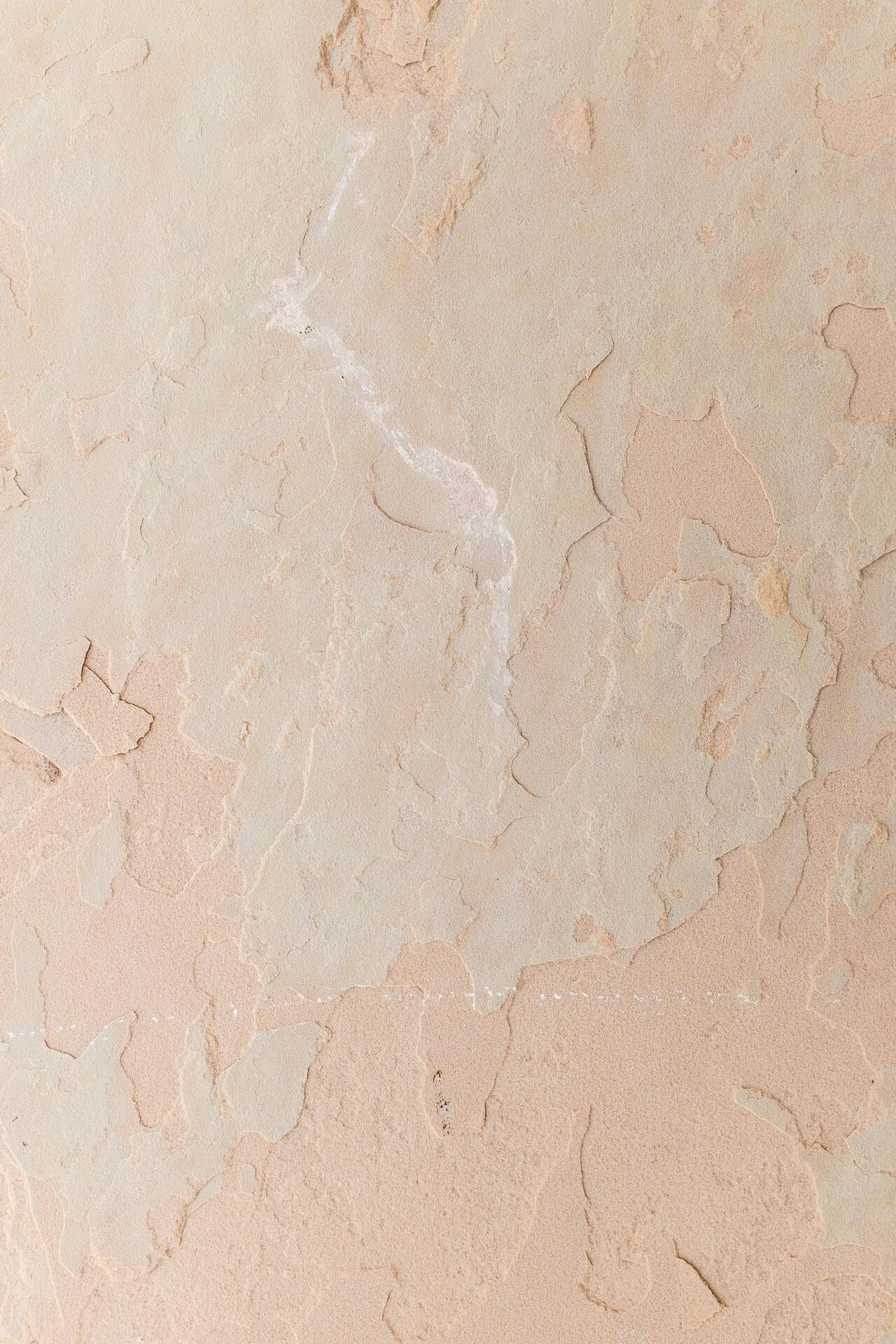
Why it’s famous: Collectively, Indian sandstone is the most-exported paving stone in the world. The four most popular export varieties — Modak (pink-red with subtle pattern), Mint (pale grey-green with cooler tones), Rainbow (multicoloured layers of beige, brown and rust), Raj Green (sage and grey-green with consistent tone) — are paving across British, Australian, Irish and New Zealand gardens by the millions of square metres annually. Calibrated 22mm and 30mm tile for residential, 50mm for commercial.
What makes Indian sandstone such a global phenomenon is the combination of price, calibration consistency, and the riven-face natural-stone aesthetic. The 1990s and 2000s British home-renovation boom created a market for “premium garden paving at sensible prices,” and Indian sandstone was almost purpose-built to meet that brief. The colour range covers every garden palette; the riven face reads as natural stone rather than concrete imitation; the calibrated edges allow tight install with epoxy grout for long-life joints.
Where it builds: Residential garden patios across the UK, Australia, Ireland, New Zealand, the United States, the Netherlands, Belgium, Germany. Commercial landscape paving in city plazas, retail centres, hospitality outdoor spaces. Pool decks and outdoor entertaining areas globally.
10 · Silver Shine Quartzite
Origin: Lalitpur district, Uttar Pradesh
Why it’s famous: Silver Shine is India’s flagship export quartzite — a metamorphic stone (originally sandstone, transformed under heat and pressure into something close to glass-like hardness) with a distinctive shimmering silver-grey surface that reflects light beautifully under polished and honed finishes. The stone has very high hardness (around 7 on the Mohs scale, harder than most granites), extremely low porosity, and a stability that makes it the architect’s choice for surfaces that need to look premium and survive heavy commercial use.
In the American kitchen market, Silver Shine and other Indian quartzites have displaced some Brazilian and Italian quartzite competition on landed price — the stone offers genuine quartzite durability and the natural-pattern aesthetic at slab-yard pricing that more closely resembles premium granite than premium marble. For UAE façade work, Silver Shine has been specified on commercial towers where the brief is “metallic-tone cladding that ages without intervention.”
Where it builds: Premium kitchen counters in the United States and Australia. Façade cladding on commercial towers in the UAE. Hotel reception desks and feature walls. Hospitality bar and restaurant counters globally.
11 · Indian Statuario Marble
Origin: Rajasthan and Madhya Pradesh
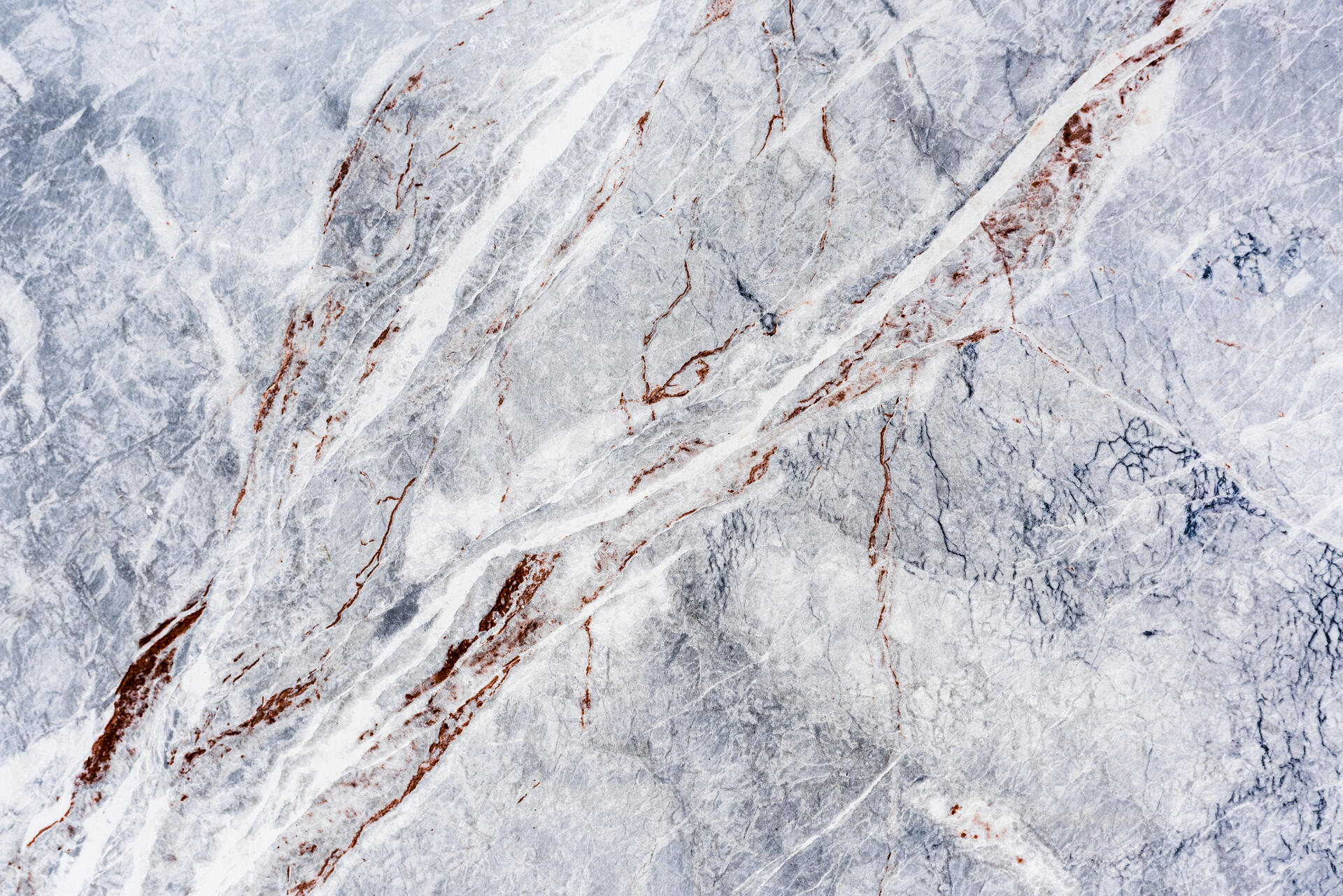
Why it’s famous: Indian Statuario is the country’s contemporary-luxury marble — a brilliant white background traversed by dramatic grey veins, modelled on the Italian Statuario tradition but quarried at a fraction of the imported price. The stone has gained ground steadily over the last decade as the global “marble look” came to dominate luxury residential interior design: white background, bold veining, polished finish, often used in waterfall edges on kitchen islands and bookmatched on bathroom feature walls.
What makes Indian Statuario commercially significant is that it offers genuine marble at prices that have allowed the look to migrate downward from ultra-luxury into mid-luxury residential. A Calacatta-look slab in your master bathroom no longer requires an Italian import; the Rajasthan quarries deliver bookmatched pairs and large-format slabs that take a brilliant polish.
Where it builds: Luxury residential bathrooms across the US, Australia, the Gulf and Europe. Kitchen islands with waterfall edges. Hotel bathroom interiors. Feature walls in spa, hospitality and high-end retail.
12 · Indian Onyx — Green, White, Honey
Origin: Madhya Pradesh and Rajasthan
Why it’s famous: Indian onyx is the country’s translucent stone — calcium carbonate banded in dramatic patterns of green, white-and-amber, and honey-gold, which transmits light when polished and back-lit. The stone is too soft for kitchen counters and too precious for general flooring, but in the right architectural context it does something no other material does: it becomes a surface that glows.
Architecturally, onyx earns its reputation in three contexts. First, in luxury hospitality — the back-lit bar in a five-star hotel, the spa reception desk, the elevator surround in a luxury commercial tower. Second, in religious and ceremonial architecture — Indian onyx has been specified in mosque mihrab work across the Gulf, in heritage church restoration in Europe, and in cathedral altar surrounds. Third, in flagship retail — luxury fashion houses use back-lit onyx for storefront cladding and dressing room interiors where the brief is “make the customer feel like they’re inside a precious object.”
Where it builds: Five-star hotel hospitality globally — Dubai, Doha, Las Vegas, Singapore. Religious and ceremonial architecture worldwide. Luxury retail flagship interiors. Architect-led residential feature pieces — the back-lit dining-room wall, the standalone bath surround, the entry-foyer feature panel.
The architectural design languages these stones support
Twelve stones, but they pattern into recognisable architectural vocabularies that designers and homeowners can think in:
The American kitchen vocabulary — Tan Brown · Black Galaxy · Steel Grey · Kashmir White. The combination of mid-tone neutrality, hard-wearing surface, and predictable colour consistency that has defined American kitchen interior design for thirty years.
The Arabian palace vocabulary — Makrana White · Jaisalmer Yellow · Indian Onyx · Indian Statuario. Brilliant whites and warm golds, polished surfaces, bookmatched walls and floors, hand-carved profiles for fountains and balustrades, back-lit onyx for ceremonial spaces.
The British garden vocabulary — Indian Sandstone (Modak, Mint, Raj Green) · Kota Blue Limestone. Calibrated paving with riven-face natural finish, in the warm-earth and cool-green palette that suits British residential garden design.
The Australian alfresco vocabulary — Kota Blue · Steel Grey flamed · Indian sandstone · Black Galaxy. Pool surrounds, outdoor entertaining floors, anti-skid finishes, the colour range that reads beautifully against Australian native landscape planting.
The contemporary-modern vocabulary — Silver Shine Quartzite · Absolute Black · Steel Grey · Indian Statuario. Metallic tones, true blacks, bookmatched whites with bold veining, polished and honed finishes for minimalist kitchen and bathroom interiors.
The heritage-restoration vocabulary — Makrana · Kota Brown · Jaisalmer Yellow · traditional carved profiles. The stones that match historic Indian and Mughal architecture, increasingly specified by conservation architects worldwide for restoration and adjacent-build work.
Visiting India’s stone trade
If you’re a trade buyer, architect or specifier interested in seeing these stones in person, our Kochi flagship gallery carries the full collection of Indian-origin stones we export, alongside Italian marble and Brazilian exotics. Walk-in trade enquiries are welcome, sample boards prepared against your project specifications, and container-direct quotes — FOB, CIF or DDP — issued against project briefs.
For trade volume conversations:
- Exports overview — capability, logistics, stone families
- Australia — Sydney, Melbourne, Brisbane, Perth, with local AU contact +61 419 395 267
- UAE — Dubai, Sharjah, Abu Dhabi, RAK
- United States — countertops, quartzite, monument granite, sandstone landscape
Phone (India HQ) — +91 999 549 8755 · WhatsApp — +91 95392 42111
These twelve stones built Mughal palaces, American kitchens, Arabian mosques and British gardens. They will keep building for as long as architects want surfaces that are of somewhere. India’s quarries are still open; the trade routes are running; and the next project — yours — can start with a sample board on the way to your address.